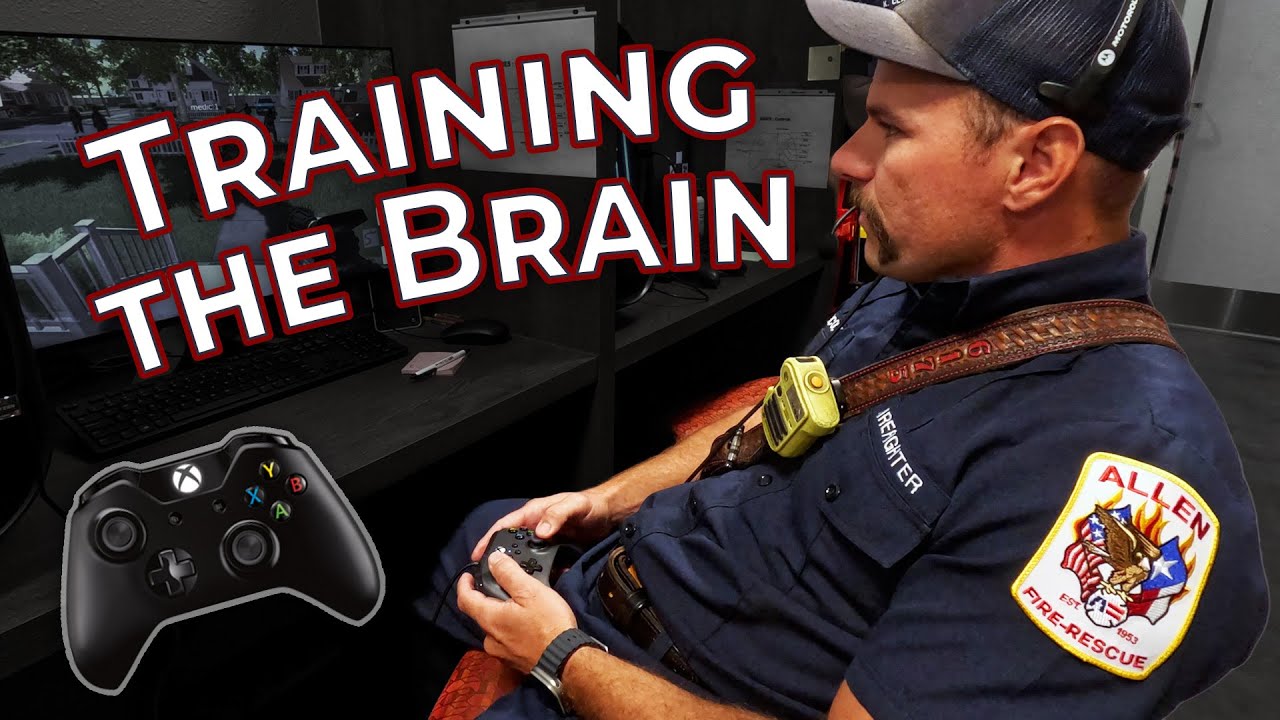
How Allen FD describes the problem.
The case for Aries is easiest to understand in the language Allen FD uses on its own ARIES program page. Live training is where firefighters learn the craft. What it can’t reliably provide is enough repetitions of the coordination and communication that a real incident demands.
“Traditional training, while fundamental, often fails to replicate the high-stress, fast-paced and unpredictable nature of emergencies. Simulation provides a controlled, yet realistic environment where firefighters can hone their skills, improve communications, make decisions, and face consequences in a safe, virtual setting.”
Aries doesn’t replace the academy, the drill ground, or live-burn work. Those are where firefighters learn how to fight fire. Aries adds something those can’t: a repeatable, demanding environment for radio discipline, sector coordination, and command-level decisions, run as many times as it takes for the patterns to land.
The department decided to build it.
Allen FD has treated research and innovation as a departmental commitment for years, a long lineage of looking for what doesn’t exist yet. When the department couldn’t find a training environment that matched the problem, Allen City Council approved the development of the ARIES program in the spring of 2022. The first version rolled out the following summer.
SmokeStack Studios formed in 2023 and the partnership moved with it, without a gap. Development happened in weekly cycles, with Allen firefighters and officers giving feedback every iteration. The structures and scenarios in the library were built under Allen’s guidance on what a realistic structure fire actually looks and behaves like, so the drills felt like the calls crews were going to run.
- 2009
Allen FD research commitment begins.
- Spring 2022
City Council approves ARIES development. Partnership begins.
- Summer 2023
First version rolled out for in-service training.
A posture borrowed from aviation and the military.
Allen FD’s public framing draws the analogy directly. The audience for high-stakes simulation has, until now, been pilots and soldiers. Allen’s position is that the fire service belongs in that group, and that the absence of an equivalent training environment was the gap worth closing.
“For industries such as aviation and military, simulation is crucial for safe and realistic training in high-stress situations. For pilots, it means practicing difficult flights and learning various cockpit setups without real-flight risks.”
Aries is the fire-service version of that posture. A multiplayer environment where firefighters and an incident commander run a structure fire from start to debrief over the same radio channels they use on shift. The consequences of every decision land inside the simulation, not on the next call.
How Allen uses it now.
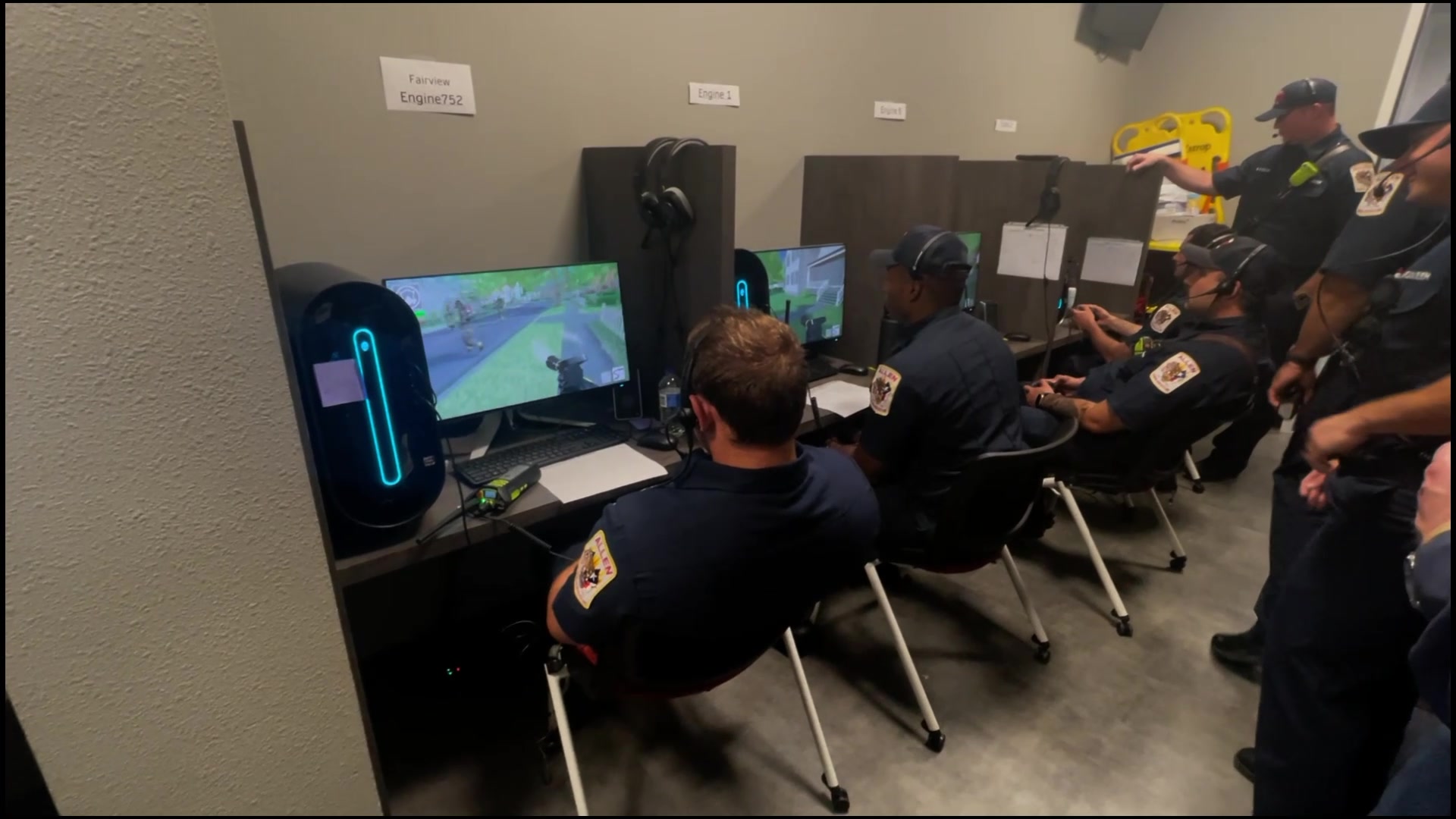
Allen runs four training sessions every summer, on shift. Every firefighter on the department cycles through, so a captain who hasn’t sat in the IC seat in twelve months gets reps before the next live incident. The summer sessions are also where the department up-trains: engine drivers get experience commanding the scene, and promotion candidates run the IC seat with structured feedback after. Below: a recording from one of those sessions with live radio traffic. This is what a drill sounds like, start to finish.
- Cadence
Four training sessions every summer, on shift.
- Coverage
Every firefighter on the department cycles through.
- Up-training
Engine drivers and promotion candidates get reps in the IC seat.
What the department is saying.
Everything below is Allen Fire Department’s own published language about what simulation training has done for their people. SmokeStack hasn’t paraphrased it or restated it as our own claim.
“Firefighters who have undergone simulation training report higher confidence and lower stress levels during actual emergencies.”
“The program has been effective in preparing firefighters for a variety of emergencies, including rare high-risk events that are seldom experienced in a firefighter’s career.”
Source: allenfire.org ↗
Where it goes from here.
Aries is going to market nationally in 2026. Allen remains the reference partner. They’re the department other departments are welcome to call before adopting. The next phase of development is broader scenario coverage, more structures in the library, and tighter tooling for the trainer running sessions. We’d rather grow the platform on real customer needs than ship a feature list that sounds good in a brochure.